

In Malacca, history doesn’t live in museums – it simmers in woks, steams in banana leaves, and lingers in the scent of clove drifting through narrow streets. Every corner of this coastal city tells a story steeped in flavor. Once one of Southeast Asia’s most vital ports, Malacca was a magnet for spice traders from Arabia, China, and India. They didn’t just bring cargo; they brought culture – infusing the city’s kitchens with tastes that still define it today.
To walk through Malacca’s old quarter is to follow a trail of aroma and memory. The pastel façades of shophouses may charm the eye, but it’s what wafts from their kitchens that captures the imagination. Each meal here is an inheritance – dishes refined by centuries of trade, migration, and adaptation. Visitors exploring through a Malaysia tour package discover that this isn’t just a city of sights, but of sensations – a place where star anise and chili are as important as architecture. For travelers drawn to both flavor and history, a trip to Malaysia often includes a stop in Malacca precisely for this reason: it’s where the nation’s palate was born.
A well-curated Malaysia tour package itinerary connects these culinary threads with ease – from Peranakan family kitchens to riverside stalls serving recipes older than the country itself. Some itineraries, thoughtfully crafted by travel specialists like Travelodeal, pair walking tours with hands-on cooking classes or local food tastings, letting travelers taste the story rather than just read it. Malacca’s cuisine isn’t performed for visitors; it’s lived – a dialogue between past and present, spice and sea.
Where Trade Became Taste
Centuries ago, ships carrying nutmeg, cinnamon, and pepper docked along the Malacca River, turning the city into one of the world’s busiest spice ports. The mix of traders – Malay, Indian, Chinese, Arab, and Portuguese – transformed its markets and its meals.
That legacy survives today in dishes like nasi lemak wrapped in fragrant banana leaves, laksa nyonya rich with coconut milk and chili paste, and Portuguese-inspired devil’s curry with its bold blend of vinegar and spice. Eating here isn’t just pleasure; it’s participation in history – one bite at a time.
The Living Kitchens of Jonker Street
By afternoon, Jonker Street is alive with sound – sizzling woks, vendors calling out prices, the buzz of conversation beneath paper lanterns. The food stalls here are tiny archives of Malacca’s multicultural story. You might taste Chinese dumplings next to Indian curries or find Dutch-style pastries filled with tropical fruit.
At Nancy’s Kitchen, a family-run Peranakan restaurant, the recipes go back generations. Dishes like ayam pongteh – chicken stewed in fermented soybean paste – taste both foreign and familiar, comforting yet layered with complexity. Every spice has a reason, every flavor a lineage.
And just beyond the main street, tucked between colonial buildings, small cafés serve cardamom coffee beside antiques and maps that whisper of old voyages.
The River’s Rhythm
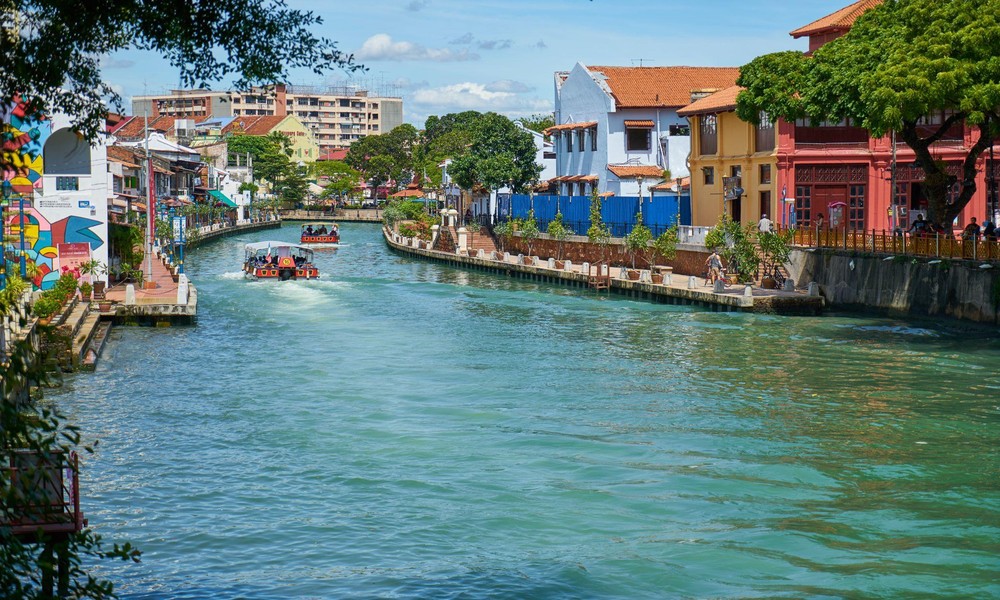
Follow the Malacca River, and the city slows. Murals bloom across old warehouses, boats drift by like memories, and the smell of clove and sugar fills the air. The riverbanks are lined with restaurants where old and new collide – modern chefs reimagining traditional recipes for today’s curious travelers.
Here, fusion isn’t a trend; it’s the city’s DNA. From chili crab inspired by Singaporean cousins to tamarind-infused seafood soups, every plate feels like a conversation across time.
Spice as Memory
Malacca’s true magic lies in how it uses spice – not to overpower, but to remember. Each blend carries a story: nutmeg from the Banda Islands, pepper from Kerala, cloves from Zanzibar. They arrived centuries ago, and they never left.
To taste Malacca’s food is to taste the world – condensed, transformed, and made uniquely Malaysian.
Final Thought
Malacca’s kitchens remind us that history isn’t only written in books; sometimes, it’s simmered slowly over a fire. The city’s flavors aren’t just delicious – they’re enduring, each one echoing journeys across oceans and centuries.
To eat here is to travel – not just through place, but through time. And as the spices linger long after the meal ends, you realize that Malacca hasn’t merely preserved its past – it’s kept it beautifully alive.