
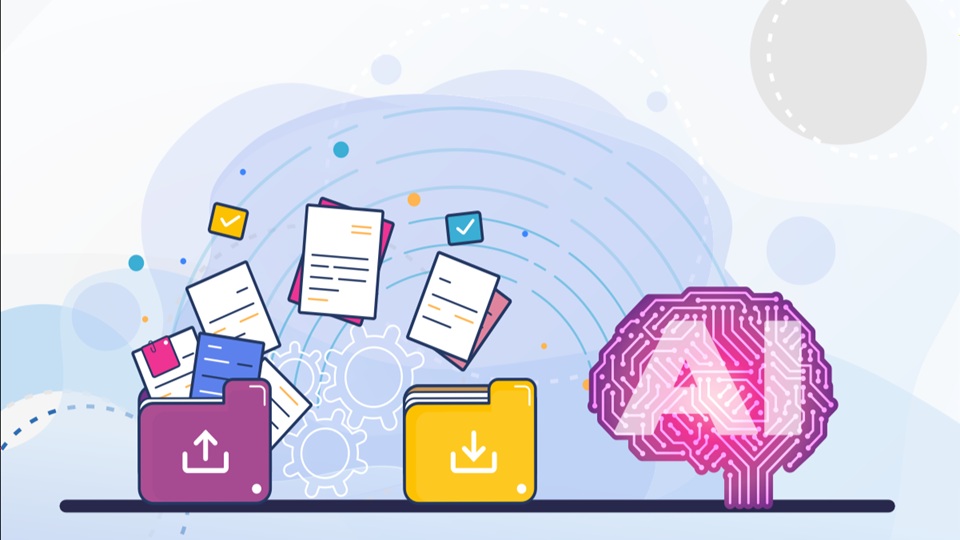

The emergence of AI knowledge management systems has begun to challenge the traditional document management solutions many companies are accustomed to. With AI integration, the potential to automatically classify, interpret, and retrieve data could revolutionize the way businesses handle information. Traditional systems, while familiar, pose limitations on efficiency and adaptability, especially in handling large volumes of complex data.
Businesses aiming to stay competitive in an information-driven market must consider how these two systems compare. In this article, we will unpack the differences, impacts, and key considerations, providing a clear picture to assist in navigating this crucial decision.
Comparing AI Knowledge Management and Traditional Document Management Systems
AI knowledge management systems offer dynamic categorization and personalized content delivery, a stark contrast to the static filing structures of traditional document management. The former harnesses machine learning to evolve and adapt to user behavior, constantly expanding its understanding and improving its service. Consequently, this reduces time spent on manual data sorting and retrieval.
Traditional systems often require users to know exactly where information is stored, which can become cumbersome with extensive document libraries. In contrast, AI-driven platforms can intuitively surface relevant information based on contextual understanding of content and user queries. The shift towards AI-enhanced systems is increasingly viewed as a means to optimize workflows.
Companies contemplating the switch should ai knowledge management by piloting AI knowledge management within a department before a full-scale implementation. This allows an assessment of compatibility with existing workflows and evaluation of the tangible benefits it may provide.
Assessing the Impact of Artificial Intelligence on Knowledge Retrieval
Implementing AI into knowledge management significantly impacts retrieval speed and accuracy. AI systems utilize natural language processing to understand and process human language, which simplifies finding information through conversational queries rather than strict keyword matching.
Moreover, these systems improve over time; each search refines the algorithms, making them more precise. Organizations report enhanced productivity, as employees spend less time searching for documents and more time leveraging information for decision-making. Such efficiency is critical in jobs requiring rapid access to up-to-date data.
Before committing to AI knowledge management, business leaders should measure metrics such as average retrieval time and search accuracy in their current system, setting benchmarks to evaluate the impact of AI post-integration. This data-driven approach can clarify the technology’s effectiveness for their specific needs.
Key Considerations for Integrating AI into Existing Document Management Practices
The decision to integrate AI into existing document management systems should be guided by a thorough analysis of current infrastructures and needs. Data cleansing may be necessary to ensure AI algorithms are trained on accurate and relevant information. This preparation can directly influence the success of the integration process.
Another essential consideration is the compatibility of AI knowledge management with regulatory compliance. The capacity for AI systems to maintain, track, and manage document changes in accordance with industry standards is a critical factor, especially for businesses in heavily regulated sectors. The suitability of AI in these contexts may vary, necessitating a tailored strategy.
Before implementation, detailed planning should take place, not only technically but also culturally within the organization. Stakeholders at every level need to understand the potential benefits and be prepared for a shift in processes, ensuring a smooth transition and encouraging wholehearted adoption.
Challenges and Solutions in Transitioning from Traditional to AI-Driven Systems
Migrating from a traditional to an AI-driven document management system is not without its challenges. Employee resistance, data privacy concerns, and the steep learning curve of new technologies are common hurdles businesses encounter. Overcoming these requires a strategic approach grounded in communication and comprehensive training.
Ensuring data security with AI platforms is of significant concern amidst rising cyber threats. Organizations should seek systems with robust encryption and privacy features, establishing stringent security protocols. Concerns over job displacement due to automation can also be addressed by highlighting the way AI can augment, rather than replace, human roles.
Effective transition plans should incorporate phased rollouts, extensive user training, and creating feedback loops for continuous improvement. This proactive management can turn potential difficulties into opportunities for growth and innovation within the organization.
Ultimately, the debate between AI knowledge management and traditional document management is one of stability versus innovation. AI harnesses the power to transform data into actionable insights with unprecedented speed and precision. While traditional systems are grounded in familiar processes, the potential for AI to drive efficiency, accuracy, and adaptability makes it a compelling option for businesses ready to embrace the future of information management.